DESSERTS
Development and dissemination of sustainable soil and water management solutions in arid regions
Development and dissemination of sustainable soil and water management solutions in arid regions
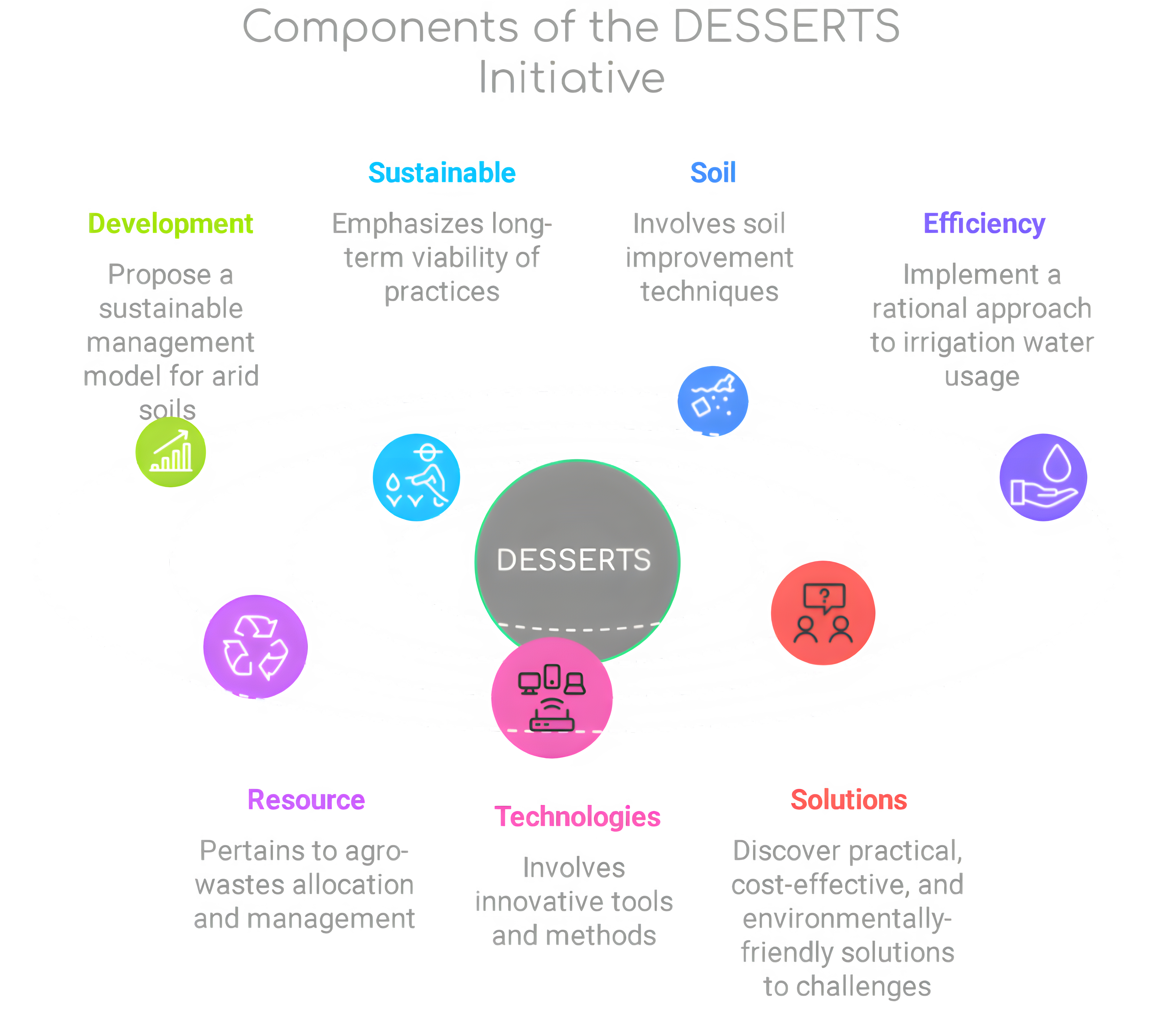

Innovative techniques to treat soil salinity and improve its physical and chemical properties.

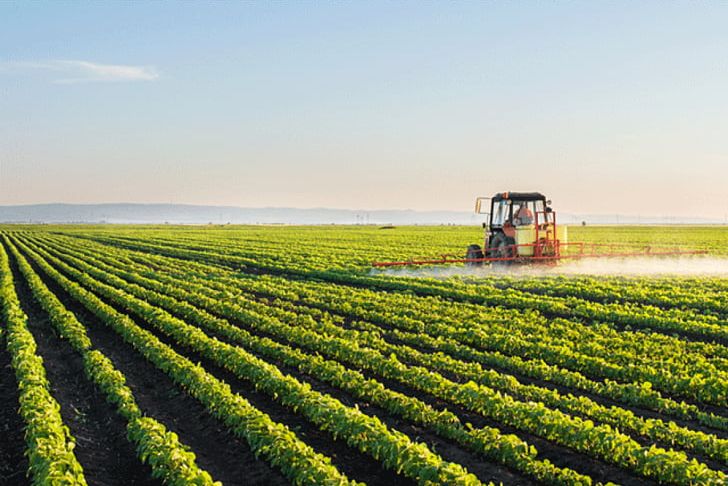
Advanced irrigation systems that optimize water use and increase efficiency.
Developing innovative techniques to improve soil productivity while preserving natural resources.
The Interprofessional Council of the Market Garden Industry in the Wilaya of Biskra is an agricultural association that brings together market garden farmers, regulatory bodies, and other stakeholders. Its main goals are to address farmers' concerns, promote agricultural activities, and facilitate knowledge sharing among farmers.
This partner plays a pivotal role in promoting agricultural cooperation and innovation in the region, providing logistical and knowledge support to implement project solutions on the ground.

Collaborating with local and international research institutions to exchange knowledge and expertise.

Involving farmers and local communities in developing and implementing solutions.
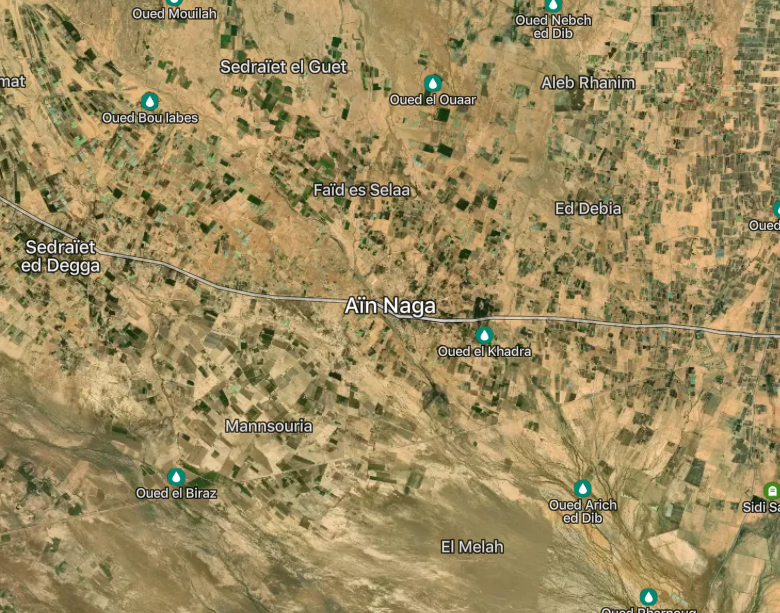
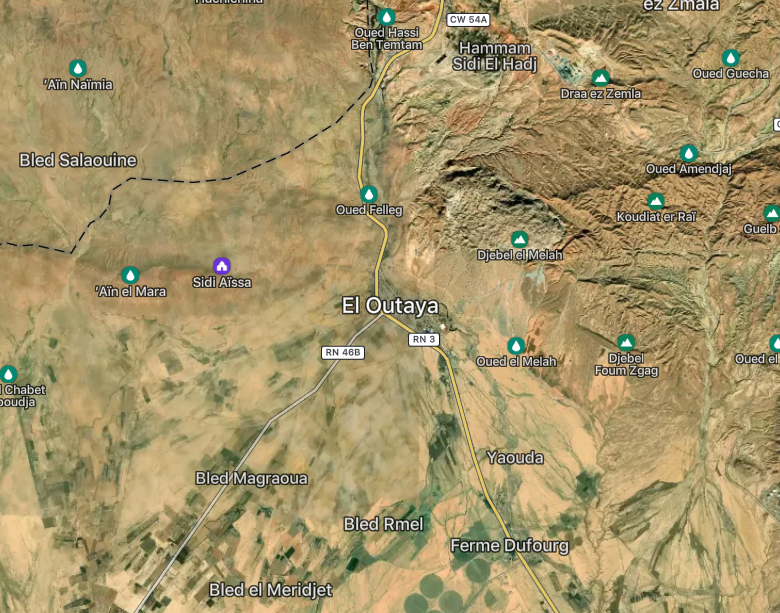
The region of Southern Algeria, with Biskra as a particular focus, has become a prominent hub for the cultivation of early vegetables and the production of high-quality dates at the national level. However, the region is confronted with a significant challenge in the form of the loss of agricultural land due to secondary salinisation. This phenomenon is caused by a combination of factors, including the use of poor-quality groundwater for irrigation, the impact of climate change, aridity, and the absence of effective leaching practices. In order to address this issue, two agricultural areas, Ain Nagga and El Outaya, have been selected as demonstration sites to showcase innovative solutions and techniques for mitigating salinisation and preserving agricultural productivity.
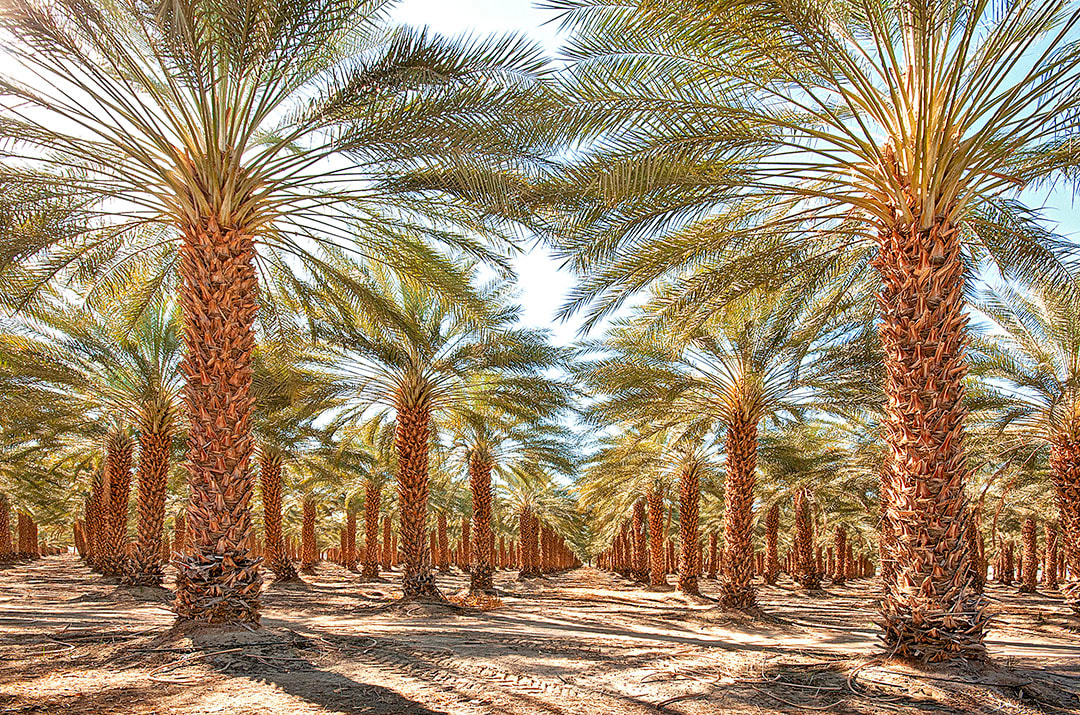
Rehabilitation of degraded groves using sustainable techniques.

Transforming agricultural waste into value-added products.
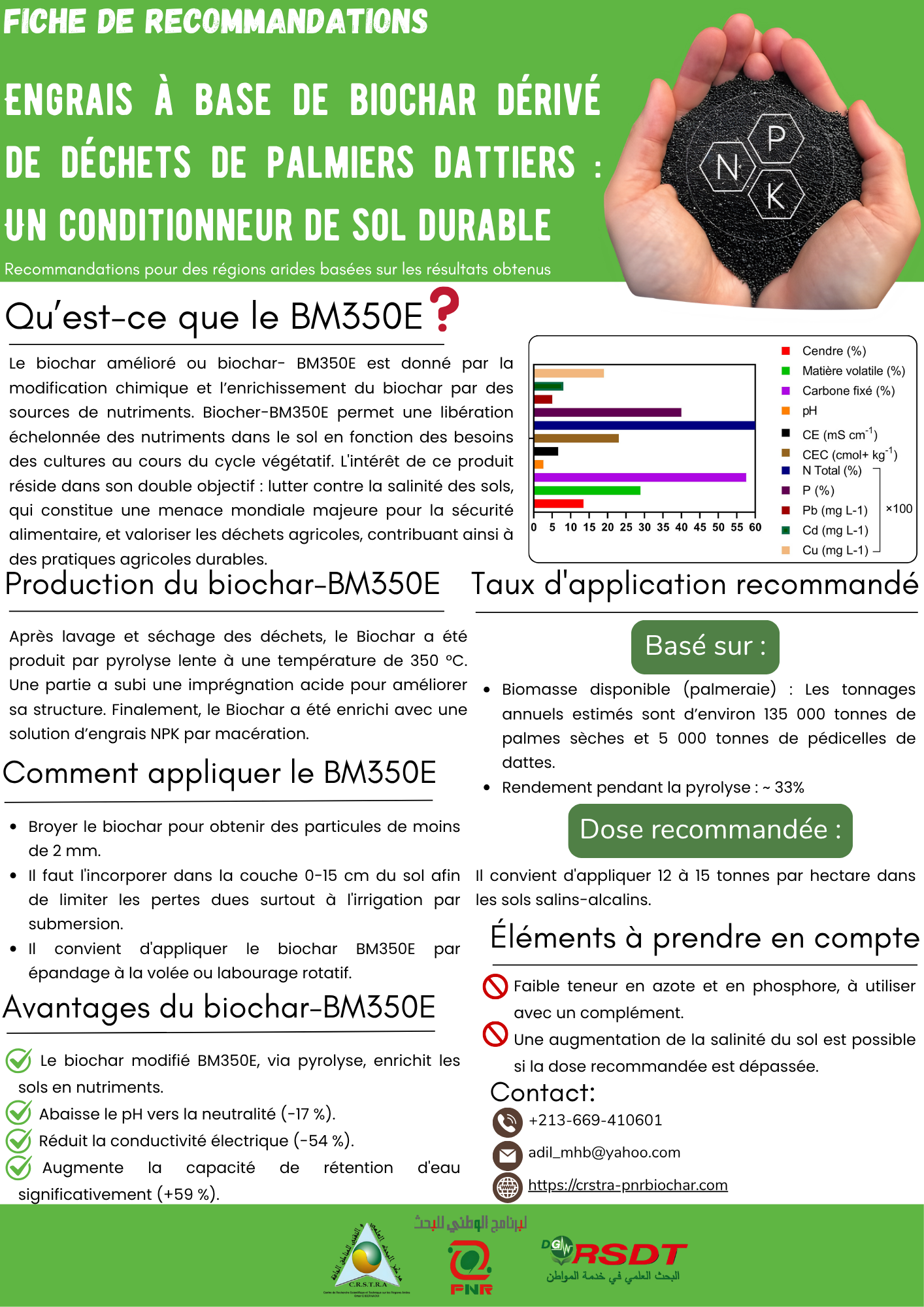
The application of BM350E modified biochar (via pyrolysis) enriched soils with nutrients, reduced soil pH towards neutrality (-17%), decreased electrical conductivity (-54%), and improved water retention capacity (+59%). In pepper cultivation, biochar alleviated salt stress, increasing fresh plant weight (+9.41%) and root biomass (+15.32%). Chlorophyll and carotenoid content rose by 80.20% and 52.43%, boosting photosynthesis efficiency. Biochar also stimulated antioxidant enzyme activity, reducing oxidative damage. Combined application with smart irrigation significantly enhanced tomato cultivation, increasing the number of bunches, total fruits, and overall yield.
Experiments highlighted the strong phytoremediation potential of Portulaca oleracea and Kochia scoparia in saline soils. Portulaca oleracea produced 31.4 t/ha dry biomass and extracted 7.7 t/ha salts within 2.5 months, while Kochia scoparia produced 29.5 t/ha biomass and removed 4.4 t/ha salts in 3 months. These findings underline the effectiveness of halophytes in dryland rehabilitation, although optimal results require appropriate time, water, and fertilizer management.
Biochar application improved soil water retention capacity by up to +59% (BM350E). When combined with smart irrigation, it enhanced tomato chlorophyll fluorescence, indicating improved photosynthetic performance and resilience against water stress. This integration allowed water savings without compromising crop yield, contributing to more sustainable irrigation management.
Agricultural waste recovery and recycling are economically important and a source of energy for many countries. Utilizing agricultural by-products as biochar improves crop sustainability, productivity, and provides income for farmers. Biochar, an innovative soil management technology, has potential for agro-economic players and ecological impact. It optimizes irrigation water usage and enhances long-term soil fertility.
Patent pending (project): Submitted to INAPI on 05/11/2024 (number: 241395) for the product 'Synthesis of slow-release fertilizer from date palm biochar for sustainable agriculture'.
The team organized a study day on sustainable agriculture in arid regions with the participation of 50 farmers and experts.